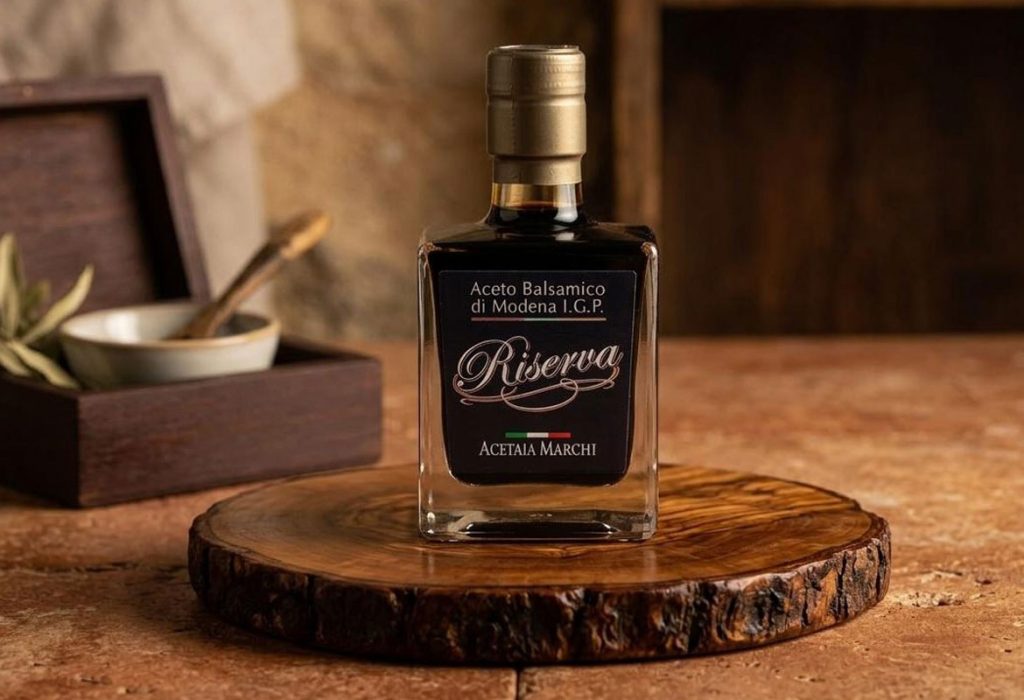
The Balsamic Vinegar of Modena DOP is a product of the highest quality characterized by a particular and long aging and maturation period, which is absolutely proven and certified. A versatile vinegar, with a unique and unmistakable flavor, and a very dark, intense, and shiny black color. Traditional Balsamic Vinegar of Modena DOP is capable of making dishes of all kinds even more special and represents an excellence of Italian gastronomy. The quality of this product derives precisely from the production methods of the ancient vinegar cellars, which strictly adhere to the Unique Production Regulation, with natural, artisanal, and traditional preparation.
Initial phases of Balsamic Vinegar of Modena production
The production of Traditional Balsamic Vinegar of Modena DOP starts with the grapes, which must be produced within the province of Modena and carefully monitored to obtain quality fruits. The typical grape varieties used for this product are Lambrusco, Trebbiano, Ancellotta, Sauvignon, Berzemino, Sgavetta, and Occhio di Gatta.
Subsequently, through a gentle pressing of the grapes, fresh must is obtained with a pleasant and clean taste, which is then transferred to the typical cooking cauldrons where it is transformed into cooked must, cooking very slowly at over 80 °C. At the end, it is thus possible to obtain a concentrated must with a typical dark color.
Fermentations and transfers
The cooked must obtained from the previously described phases is then transferred to the appropriate demijohns, inside which the naturally occurring yeasts in the vinegar cellar begin the alcoholic fermentation. The sugar is slowly and progressively transformed into alcohol, resulting in the so-called base wine. Obviously, this fermentation process is carefully monitored by the master vinegar makers to ensure everything proceeds correctly.
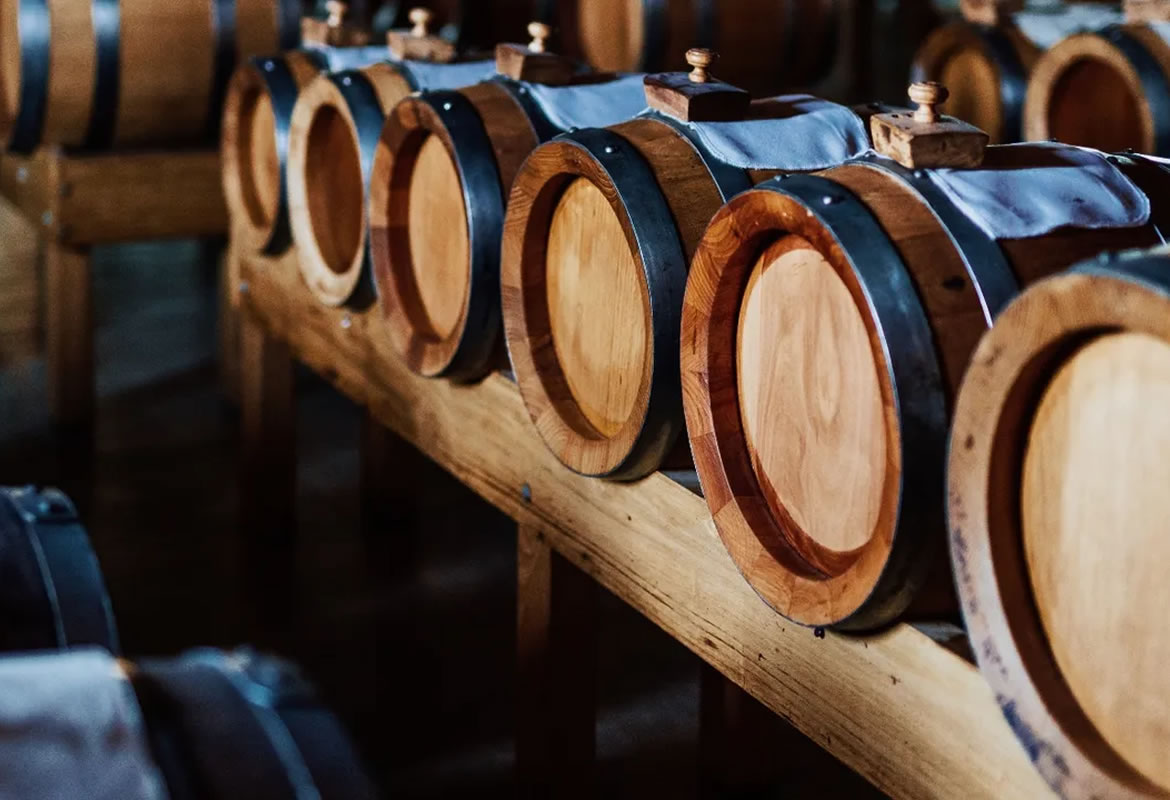
Following the alcoholic fermentation, the most complicated phase of the production of this vinegar begins, which generally takes place in the spring and winter: the acetic fermentation. The base wine is transferred to the mother wooden barrels and here it is mixed with one third of aged Traditional Balsamic Vinegar of Modena DOP, rich in acetic bacteria. The alcoholic part thus begins the fermentation into vinegar until the creation of the base vinegar.
When the product reaches the appropriate acidity, in a time that can vary from one to two years, it is transferred to the appropriate batteries made of different woods and sizes. During the winter and then spring, the classic transfers are made to restore the product level in the barrels that evaporated during the previous summer. It starts with the smallest barrel and continues until the largest barrel. The latter can finally be filled with the base vinegar from the mother barrels, remembering that these barrels should never be filled more than 3/4 full to always maintain good contact with the air.
Tastings
At the end of the production of Traditional Balsamic Vinegar of Modena DOP, it is brought to the Protection Consortium responsible for conducting all the appropriate checks in accordance with the Chamber of Commerce of Modena. The tasting commission evaluates its suitability and, after a positive outcome, the product is bottled directly at the Consortium. From here, two products are created: a refined vinegar, with a minimum aging of 12 years, and an extra-old vinegar with a minimum aging of 25 years.