Balsamic vinegar is one of the gastronomic treasures of Italy and represents a culinary tradition rich in history and passion. Its production takes place in special places called “acetaie,” where the vinegar is carefully produced and aged. In this article, we will explore the art behind the production of balsamic vinegar and discover what makes the acetaie so unique.
The Origin of the Black Gold of Modena
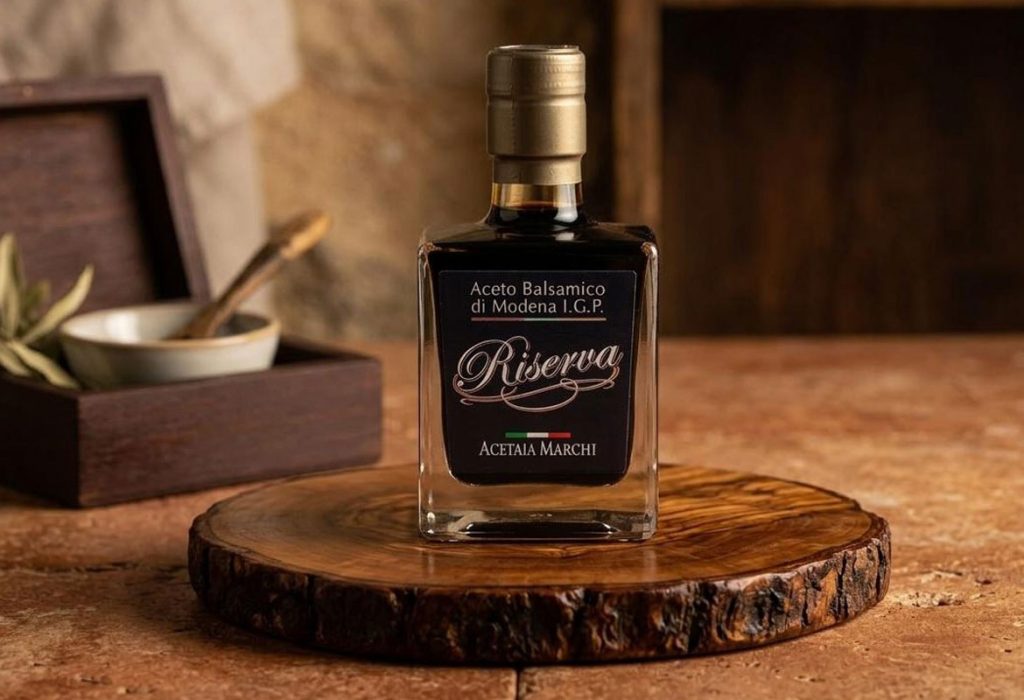
Traditional Balsamic Vinegar of Modena DOP and Balsamic Vinegar of Modena IGP are products originating from Emilia-Romagna. Their history has roots in antiquity (ONLY FOR DOP) and has become a distinctive tradition especially of the Modena area. Also known as Black Gold, to highlight its prestige and a characteristic of its appearance (it has a very dark color), this condiment is now appreciated in every part of Italy and in many other places around the world.
The production of balsamic vinegar is regulated by various procedures and guidelines, and characterized by methods passed down from generation to generation. The main ingredient is grape must, known as cooked must, which is aged in wooden barrels.
The Acetaia: a place that embodies passion and tradition, fundamental in the production of balsamic vinegar
The acetaie are the places where Traditional Balsamic Vinegar of Modena DOP is produced and refined and/or aged. These facilities are often run by families who have preserved the tradition of this precious condiment for generations. A visit to an acetaia is a unique experience that offers a window into the history and culture related to this valuable condiment.
Inside an acetaia, you can admire the various stages of production of Traditional Balsamic Vinegar of Modena DOP. This long and complex process begins with the harvest of grapes that must be ripe, of high quality, and of local varieties (from the Modena area) such as Lambrusco or Ancellotta. Subsequently, the grapes are crushed, and the must obtained is simmered for hours. This process reduces the must to a very dense syrup known as cooked must. The latter is fermented in wooden barrels… This is the starting point for the “birth” of balsamic vinegar.
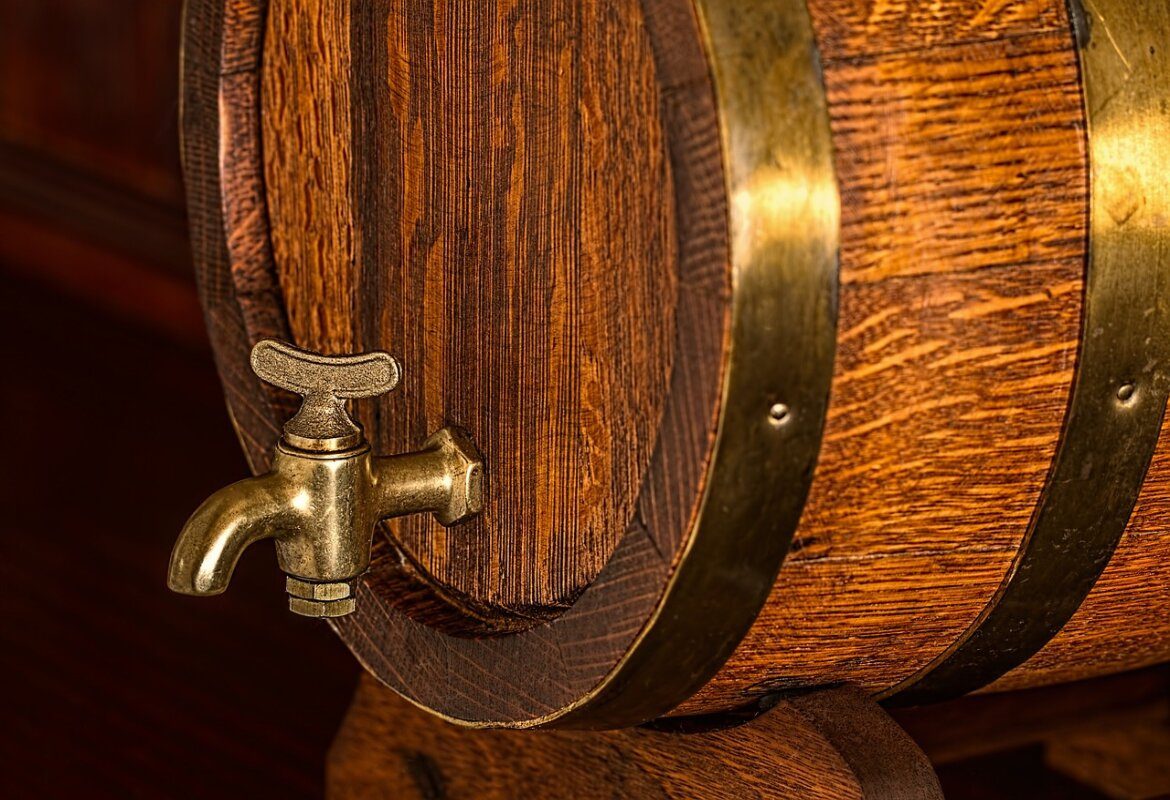
The immature vinegar is gradually transferred into a series of increasingly smaller wooden barrels. Each barrel can be made from a different type of wood, such as cherry, oak, mulberry, or chestnut, and imparts unique aromas and flavors to the condiment. Traditional Balsamic Vinegar of Modena DOP must age for at least 12 years. During this period, the vinegar thickens and develops its characteristic sweet and sour flavor.
Tasting in the Acetaia
Inside an acetaia, you can not only see how balsamic vinegar is produced: you can also savor this delicious condiment. You will be able to taste the difference between Balsamic Vinegar of Modena IGP, with its sweet and tangy flavor, and Traditional Balsamic Vinegar of Modena DOP Aged (at least 12 years) and Extra old (at least 25 years) which boasts a rich, complex, and velvety flavor.
The Production of Balsamic Vinegar in Our Acetaia
If you wish to visit an acetaia, you can come to ours. Inside the Acetaia Marchi, you will see with your own eyes how the production of balsamic vinegar takes place. You will discover that this product is much more than just a condiment: it is a culinary tradition passed down from generation to generation, as well as a gastronomic treasure to be enjoyed and appreciated.